Our Gravel Project started back in 2006 when we procured our founding male ‘Orange Kush’, a Ghana import male thought to be an orangebelly.
He exhibited a deep, rich black background that was high contrast to a very high yellow, gold outlined saddle forming a partially banded patternation. He had subtle orange flamed gradients in between his lateral saddles and a ventral/lateral transition packed with thick tracks of melanin and orange tinted scutes. He was the most striking yellow belly complex animal we had ever seen!
With age and size these traits became more subtle, like with many snakes in this complex, and can become quite muted as adults and often mistaken by their caretakers as Wildtypes or ‘normals’. In fact, I’ve seen more keepers find out that their Pastel ball python to be a Pastel Yellowbelly complex combo more often than any misidentification that I can think of. This is due to the fact that this gene complex in heterozygous form spends its whole life gaining melanin and becoming more subtle. In contrary, the homozygous form of this complex spends its whole life losing melanin in a hypomelanistic manner. Adding other genes that can dominate this complex compounds the identification difficulty issue and many combos can go overlooked. These complexes include but aren’t limited to, the pastels, the blue eyed leucistic complex and the super black complex.
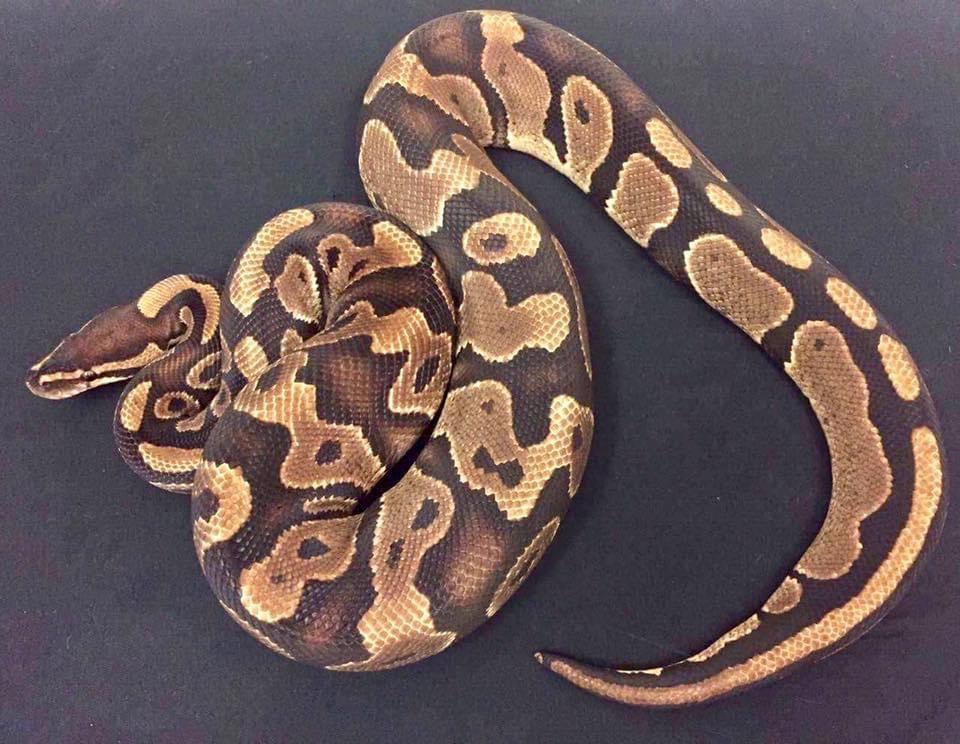
In 2008 we hatched our first offspring from outcrossing ‘Orange Kush’ with our Dominant Red Blush import line dame ‘Acapulco Red’.
We had interesting results, producing very melanin packed, granite, dirty gravel offspring, some Wildtypes clearly affected by the outcross and 1 peculiar, overly busy patterned gravel female which was later generalized to be a polygenic interaction of the two morph genes.

It was then and with future offspring results, that it was clear that ‘Orange Kush’ had an additional hitchhiking granite gene that he passed on to bulk portion of his offspring, and at this time we formulated our Gravel Grading System.
Due to my hard-headedness, and clear direction, I forwent breeding ‘Orange Kush’ to a female offspring for a very long time and continued to explore dihybrid outcrossing, producing combos with the gene paired with other morph gene complexes. The first reason being that producing a presumed all white snake with a yellow dorsal stripe was not high on my list of priorities. Secondly, I became partial to utilizing a specific female bred for clutch size and overall genotype to attempt the homozygous form.
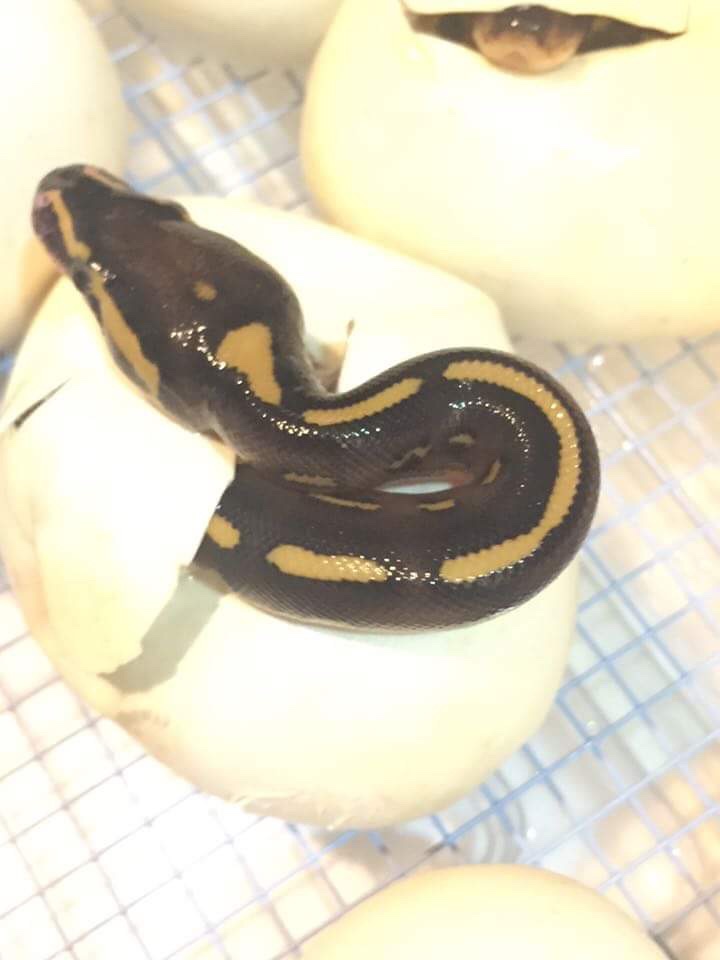
Once this female offspring ‘SensiKush’ procreated I was excited to have a shot at producing the rare ‘Graphite’ Ivory. When the eggs started pipping I was concerned seeing what I believed to be Ebonies in the clutch. Concerned with their well being and life expectancy I peered into the pipped eggs a little deeper to inspect for error or umbilical complication and to my surprise a different patternation was present, one not commonly and only rarely and newly seen – The very dark contrasting and distinct pattern of the Super Gravel. It was then clear to me that the strikingly dark animals in front of me and all the combo animals I’ve hatched over the years within my colony were Gravel Combos.
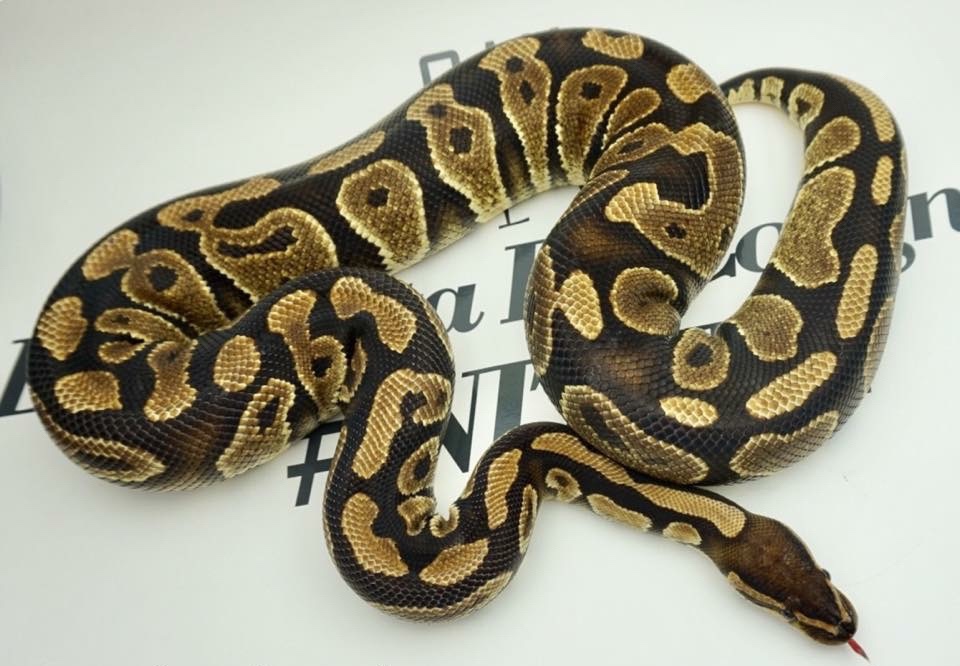
I continue to work with this line of Gravel exclusively and with love for their genotype, phenotype and hardiness and plan to continue to do so as long as I keep and care for this majestic species.
 WickedFairyMagic